

Thrive+ Keynote „Claim Your Space" – Lumen Museum, Kronplatz
Five women in a room of forty-plus people.
That's the ratio in the picture I opened my keynote with. A research consortium developing safe AI for autonomously driving regional trains. Startups and corporates, universities and research institutions, law and certification and engineering, all in one room. Wide and deep representation of the people working on the technology of our future.
And only five of us were women.
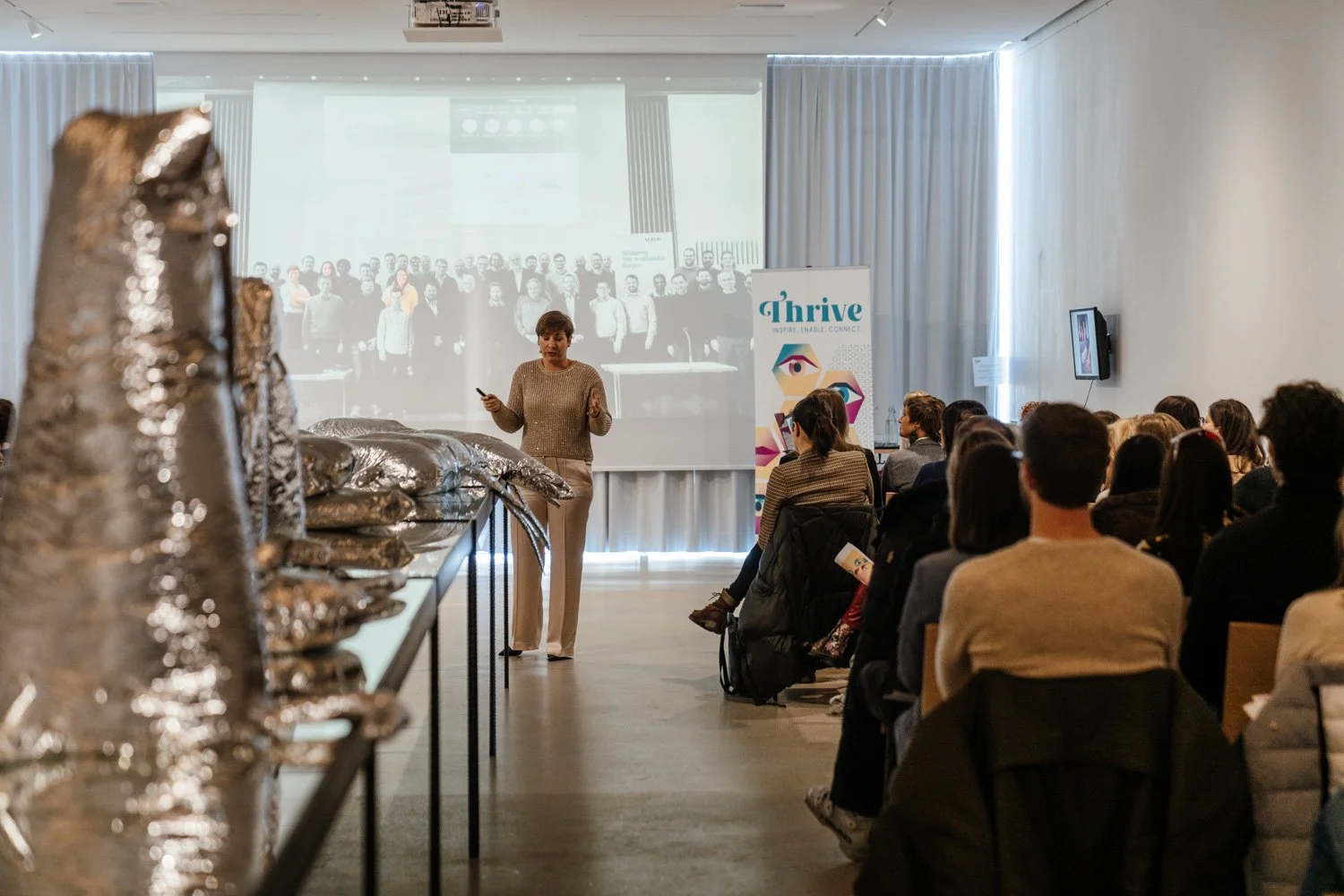
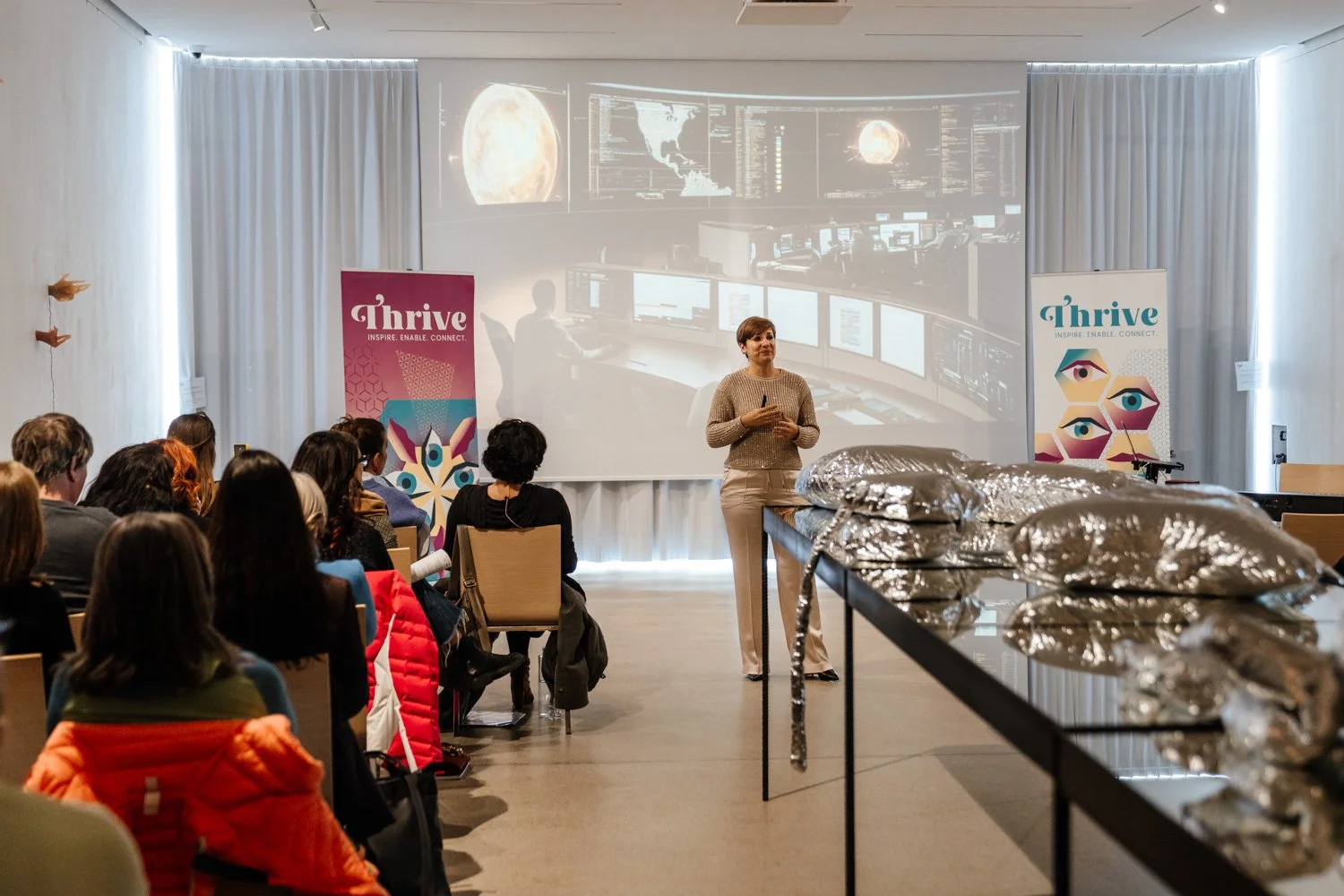
That was 2022. In December 2024, I brought that image to the Thrive+ Community at the Lumen Museum of Mountain Photography on Kronplatz, 2,275 meters above sea level. Alexandra Kammerer and Nora Dejaco had built a stage where the conversation about women in tech, AI, and leadership could happen with the alps behind it.
The keynote was called „Claim Your Space." Three threads ran through it:
Representation shapes the technology. When women aren't in the rooms where cars are designed, crash test dummies get built around average-height male bodies. When women aren't in the data that trains large language models, the models learn the world as men have written it. Ask ChatGPT to write a performance review for John and one for Jane — same job description, only the name changes — and John exceeds expectations while Jane meets them. That isn't a bug in the model. It's a mirror of the training data. Europe's AI Act tries to regulate the models. But regulation alone isn't enough. We need to change the data. And that starts with changing who's in the room.
The personal cost of sticking out. I told the story I don't usually tell on corporate stages: 2012, an aerospace conference, my first big presentation on how to send more intelligent spacecraft to Mercury. The reactions I got — „We've never done that before" and „Why fix something that isn't broken?" — landed with a weight I couldn't fully explain at the time. Was it my youth? My idea? My gender? I still don't know. What I know is that I never handed in my PhD thesis afterwards, because I convinced myself the research wasn't good enough. My male colleagues, arguing the same points with more confidence, kept going.
Small actions change systems. In the middle of the keynote I asked the room to stand. Pick two random people, memorize them, then move until you form a perfect triangle with them. Everyone moved. Everyone had to keep moving, because every time one person shifted, two others had to adjust. That's the point. You are part of a system. When you change, the system changes. You don't need to be Fei-Fei Li or Timnit Gebru or Joy Buolamwini to matter. You need to be in the room, and you need to move.
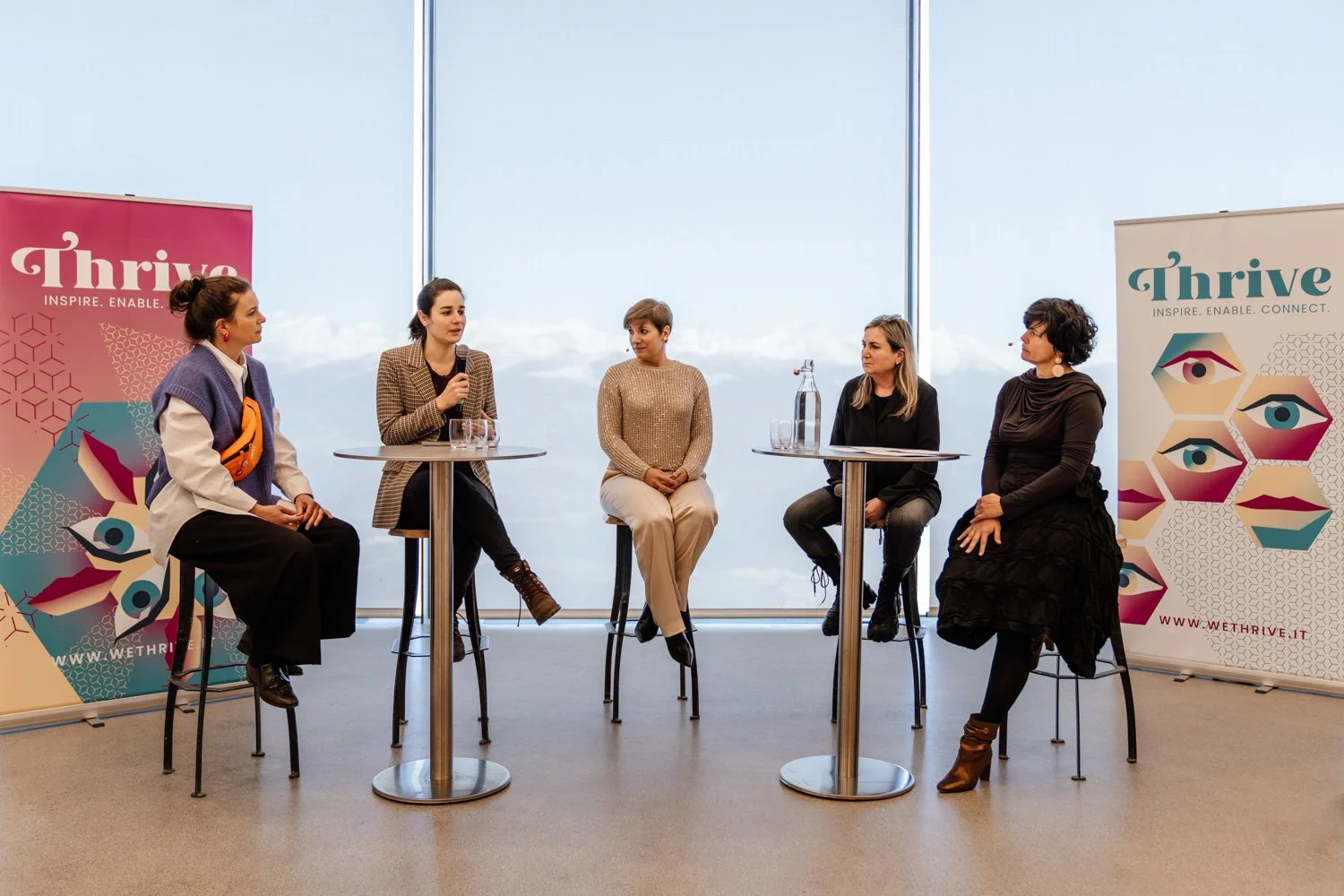
[BILD: Alexandra-Wander-Thrive-Plus-Panel-Working-Moms-Lumen.jpg (Image 18). Alt-Text: „Panel discussion on work-life-family balance at Thrive+ on Kronplatz with Alexandra Wander and four other panelists, with the Dolomites visible through the panoramic window behind them."]
Later that day I joined a panel with four other women on work-life-family balance — the conversation about being a working mother that so often stays in private chats and rarely reaches a stage. The alps were the backdrop; the questions were the same ones women ask themselves at 6 a.m. on a Monday morning.
Three things I wanted the room to take home:
Take responsibility. No one cares more about your career and your dreams than you do. Have courage. Step up and claim what you need to live a life you actually love. Create the change you want to see, even in small steps.
Thank you to Alexandra Kammerer and Nora Dejaco for building Thrive+ into a room where this conversation could happen — and for choosing a location that made stepping into the space feel physical.
Where are you the only one in the room right now — and what would change if you moved?
Further Reading:
Thrive+ Community